What this looks like
Something was done to you. As a child, as an adolescent, as an adult. By a stranger or by someone you knew. You may have told someone or you may have kept it. You may have processed it once and thought you were done. You may not have spoken about it. The effects are still organizing parts of your life: how you relate to your body, to sex, to safety, to people who remind you of the perpetrator.
You survived. The way you survived is now a system that’s been costing you. Both things are true.
What you’ve already tried
- Trauma therapy that asked you to tell the story
- EMDR
- A survivor support group
- Reading about sexual abuse and healing
- Confronting the perpetrator (or not)
- Telling family members and the responses being what they were
- An SSRI
- Trying not to think about it
The effects haven’t fully resolved.
What kind of trauma response is yours?
Educational, not diagnostic. Not a substitute for clinical assessment.
© The Institute for Applied Strategic Therapy. All rights reserved.
Why this is structurally different
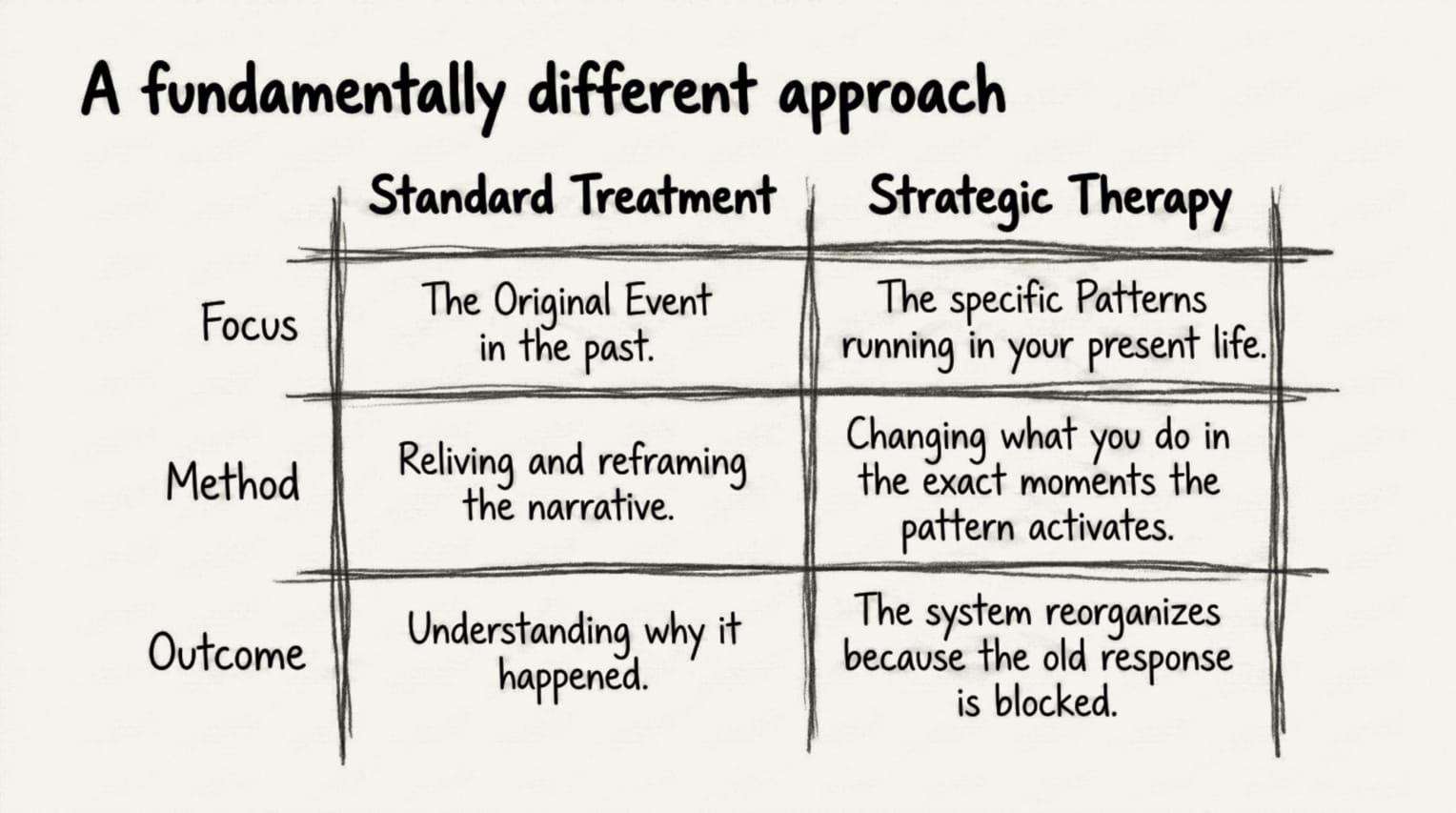
Sexual abuse organizes the survival response in particular ways. The body became the site of the harm, which means the body is still flagged as the place where the danger is. Touch, intimacy, sex, vulnerability with others, being in your own body: each of these can activate the response. The standard trauma treatment processes the memory. The standard treatment doesn’t always reach the present-day patterns of how your body and your relationships have been organized around what happened.
You very likely came up with adaptations specific to what was done. You may have learned to dissociate from your body during touch. You may have learned to choose partners who don’t push, or who do push and reactivate the original setup. You may have built a sexual life that works around a wall, or no sexual life at all. You may have absorbed the lesson that being vulnerable is being unsafe, and the lesson runs in every relationship you have, not just the sexual ones.
For specific present-day patterns, see I can’t be touched , I’m afraid of sex , or I have painful sex . For the broader trauma framework, see I have PTSD or I have CPTSD .
The event ended. The way you survived is still running.
How we work with it
Strategic therapy traces the work back to your present, to what’s happening now that’s still being organized by what was done, instead of asking you to retell what happened. The patterns of touch, intimacy, vulnerability, and safety get addressed where they actually live now, in your current relationships and your relationship with your own body.
Your body becomes yours again. The harm stops dictating the present.